
Righteous’s Hoodie versus Everyday Basic Hoodies: Does Paying More Pay Off
At some point, every shopper lands at this fork in the road: keep buying the inexpensive hoodie found in almost every chain store, or put down more money on something from a brand that views the hoodie as a real piece of craftsmanship, not an throwaway detail. We Are Righteous forged its reputation on that second option, and the thing worth examining truthfully is whether the upgrade actually changes anything about how the hoodie fits, wears, and lasts. This isn’t marketing fluff. It’s a breakdown of what distinguishes a standard hoodie from a Righteous hoodie, using the elements that actually matter once the garment is off the hanger and in use.
The comparison isn’t just about price tags. It’s about construction choices, fabric weight, fit philosophy, and the kind of durability that dictates whether a hoodie survives two winters or two washes. The Righteous label has earned a name around the idea that streetwear-inspired essentials merit the same craftsmanship as upscale apparel, and that mindset plays out in ways you can actually check.
Defining «Basic» in Hoodie Construction
Standard hoodies are built for one thing: minimizing production cost while reaching a price point customers can commit to instantly. That usually means thinner material blends, often in the 240-280 GSM range, minimal-structure paneling with minimal reinforcement, and printing methods that crack or fade within a few dozen washes. Brands operating at this tier are maximizing shelf turnover, not garment lifespan.
None of that makes basic hoodies useless. For a occasional layering item worn twice a month, a $25-$35 hoodie does its job. The problem surfaces with how often it’s worn. A hoodie in regular rotation, worn two or three times a week, hits the wash cycle 100+ times a year. Entry-level build quality can’t withstand that kind of mileage, and the fabric reveals the strain: fuzzing across the sleeves, loosened cuffs, a hood that loses its form.
The stitching reveals a similar issue. Basic hoodies commonly employ a single-needle construction on seams righeous that take the most stress — underarms, shoulder yokes, the pouch pocket. That construction is adequate until the seam is stressed over and over, at which point it’s the first place it gives out. It’s less a flaw than a trade-off; it’s a manufacturing choice made to meet a price threshold, and shoppers should understand that trade-off going in rather than finding out only after months of wear.
How the Righteous Hoodie Breaks From the Pattern
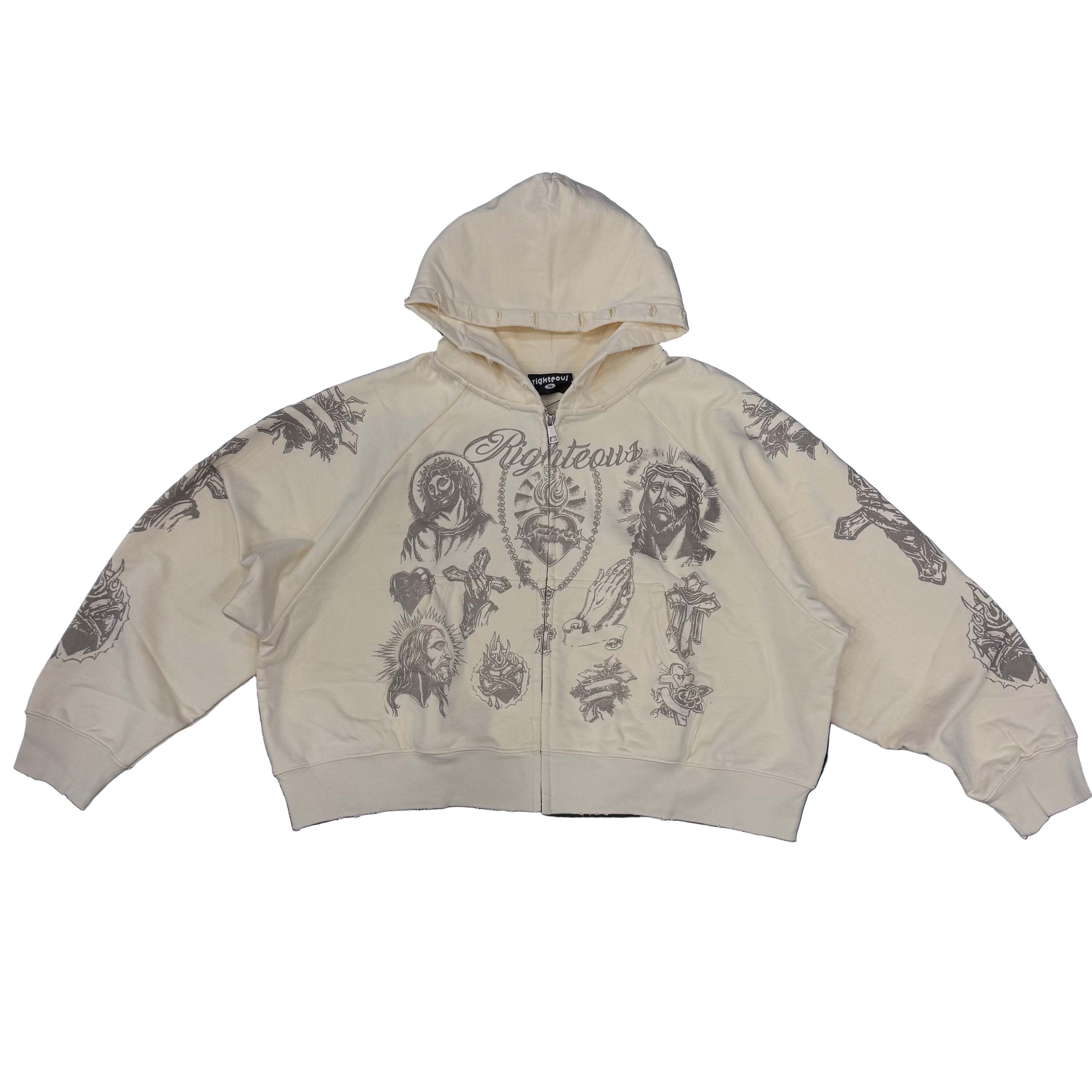
Tackling that identical garment category is what the Righteous hoodie does, but with a contrasting set of focuses. Heavier fabric weight is what stands out first — a denser cotton-poly blend that keeps its shape instead of going limp after a wash cycle. Most shoppers underestimate how much that weight matters; it’s the difference between a hoodie that holds a proper hang and one that just hangs.
Construction-wise, Righteous-made pieces uses reinforced double-stitching at pressure zones, which is a minor touch with a big return over the life of the piece. Fortified seam-work don’t just delay failure, they reshape the way the hoodie fits over time, because the fabric panels hold their intended shape instead of deforming lopsidedly at the weak points.
The print and embroidery work follows a similar logic. Instead of vinyl heat-transfer printing that basic hoodies lean on to cut costs, Righteous pieces tend to use direct-to-garment or embroidered detailing that survives repeated washing without peeling. That’s the kind of detail that’s invisible on day one and glaring by month six, which is precisely the point at which most basic hoodies start looking worn out.
Approach to Fit: Bigger Cut Isn’t Always the Win
Streetwear culture has mainstreamed the oversized, boxy hoodie silhouette, and both basic and premium brands go after that silhouette. What separates them is how it’s done. A cheaper hoodie achieves «oversized» by simply cutting more fabric without rebalancing the silhouette, which often results in a boxy mass that doesn’t actually flatter anyone. Righteous’s hoodie fit is deliberately calculated — the drop shoulder, the body length, the cuff ratio are all calculated so that loose silhouette still holds a silhouette instead of turning into a shapeless bag.
This is a spot where a quick fitting-room test tells the full picture. Basic hoodies with loose proportions tend to bunch at the waist and pull awkwardly at the shoulder seam when you lift your arms. A carefully built boxy fit moves with the body instead of working against it, which is a difference that’s understated but genuine once you compare the two in person.
Consistency in sizing is one more factor people undervalue. Basic hoodie brands regularly change proportions from production cycle to cycle because production is spread across several factories to keep costs down. One order of the same size can differ noticeably from a repeat order six months later. Brands with tighter production control, which is part of what a we are righteous review tends to highlight, maintain more consistent sizing across runs, which matters for anyone assembling a wardrobe around one particular fit.
What You Actually Pay Per Wear: The Figure That Really Counts
In weighing these two categories, the tag price proves to be an unreliable measure. Cost per wear is the figure that captures real value, and it shifts the conversation substantially. A $30 basic hoodie that survives 40 wears before it’s visibly worn out costs roughly $0.75 per wear. A sturdier, better-constructed hoodie at a higher price point that lasts for 150+ wears lowers the per-wear cost by a wide margin, even if the upfront number looks steeper.
The whole equation only makes sense if the hoodie genuinely follows through on durability, which is why the weight of the fabric and the quality of the stitching go beyond mere looks — they’re the mechanism that justifies the steeper cost. A hoodie that pills and stretches within a season resets the cost-per-wear calculation in the basic brand’s favor, so durability isn’t a nice-to-have, it’s the entire value proposition.
Buyers taking a real, honest look back at what they bought tend to note a consistent pattern: the hoodie keeps its shape well beyond a year, the graphic or embroidery doesn’t degrade, and the color stays closer to true black or true heather instead of drifting toward a faded gray. These are the specific, verifiable claims that separate marketing language from real performance.
Comparing the Two, Head to Head
| Characteristic | Basic Hoodie | Righteous Hoodie |
|---|---|---|
| Fabric Weight | 240-280 GSM, less dense blend | Denser cotton-poly blend, denser structure |
| Stitch Quality | Single-needle seams | Double-reinforced seams at pressure points |
| Print Longevity | Heat-transfer vinyl, prone to cracking | Embroidered or direct-to-garment printing, wash-resistant |
| Fit Consistency | Inconsistent across batches | Consistent silhouette across runs |
| Estimated Wears Before Wear-Out | ~40-60 wears | over 150 wears out of it |
| Cost Per Wear (approximate) | Increasing over time despite a low initial price | Lower over time despite a steeper initial price |
Situations That Favor the Basic Hoodie
To be fair, it must be said paying more isn’t always warranted. If a hoodie is going to be used for a layering piece under a jacket where it’s rarely seen, spending more doesn’t make sense. Basic hoodies serve a real purpose for infrequent or utility wear, and it makes little sense to spend extra for toughness that will never be put to use.
Everything changes the moment a hoodie starts getting worn every week, a piece that represents personal style rather than just warmth. At that point, the basic hoodie’s shortcuts — lighter material, fragile stitching, cracking prints — become liabilities instead of neutral trade-offs. That’s the exact use case Righteous apparel is designed around: a hoodie designed for frequent wear and to still look deliberate and well-kept after a year.
Another thing worth flagging is that brand identity plays into this decision. Our righteous brand posture leans into a specific visual identity and statement, which matters to shoppers who want their clothing to make a statement rather than act as blank fabric. That’s a subjective factor, but it’s a real one — plenty of shoppers are comparing not just construction but what wearing the piece says about them.
Our Final Take
For anyone who intend to wear the piece often, wash it repeatedly, and expect it to hold shape and color across a year-plus of wear, moving up from a basic hoodie to a Righteous-brand hoodie pays off. The more substantial fabric, strengthened seams, and long-lasting print methods aren’t just marketing polish — they’re the specific construction-based reasons the garment endures three to four times longer than a basic alternative, which drives cost per wear down even though the sticker price is higher from the start.
For infrequent or everyday practical wear, a basic hoodie remains a solid enough choice, and there’s no need to overspend on durability that will sit unused. But for anyone building a wardrobe staple, comparing Righteous clothing against the basic hoodie aisle boils down to a simple question: how many times do you really plan to wear this? The more wears you rack up, the faster the upgrade earns back its cost.